Showing posts with label Backcountry Bumming 101. Show all posts

12.09.2013

Bob Athey: The Wizard of the Wasatch

I like this guy.  Years ago I saw a video where he was featured living in a teepee out in the mountains.  It's good to see that he's still getting after it.  According to this film he's been averaging over 100 backcountry ski days per year for the last 35 years!  Impressive!

Bob Athey has been hiking, skiing and snowboarding around the Wasatch mountains in Utah for the past four decades. He is known as the Wizard of the Wasatch because of his looks and his ability to navigate in backcountry avalanche terrain. 

Anyone who gets out into the Wasatch backcountry has run into Bob and either loves him or hates him. His knowledge of snow and the mountains is rivaled by few.

The Wizard of the Wasatch | The Backcountry Experience, Ep. 5


10.23.2010

Nine to Fives Ruin Lives.

A public service announcement from the folks at Skiing the Backcountry.


If you're part of the backcountry skiing community, join this  Backcountry Skiing Community.

I like Skiing the Backcountry because it's not filled with "cooler than you" bullshitters.

I contribute as WarPigSinFin.

My goal is to log 3 zillion vertical feet this winter.  Once the snow flies nothing else matters.

10.14.2010

Stash Your Cache: Building a Budget Backcountry Retreat

NEWS FLASH!

Gold is booming even more than before cuz' the FED's QE2s in the works.  The dollar is tanking.

International conflicts are escalating, and the greedy rich are planning to profit from the most costly industry of all: WAR.

American kids are being enlisted to to patrol their neighborhoods spying with camera phones to "Keep America Safe" from suspicious activity.  I think we should all join!  Get old lady Sue on tape hangin' her laundry.  "She's kinda suspicious and she speaks with a Russian accent... better get someone down here."

***

I've been wrestling with this article off and on for a few months.  I kept putting it off as I contemplated the wisdom of publishing it.

It's finally finished and has been published by the friendly folks over at CleanSnipe.  Anyone sssssshmlurking to do a little tramping about may want to give it a look.

If you're in the market for any outdoor gear, consider searching for it through CleanSnipe.  They offer a great service and give me carte blanch to spew crucial knowledge like this...

Max Edward Mogren
October 13, 2010


9.07.2010

Winter's Coming. Get Stoked with 1983's French Masterpiece "Apocalypse Snow"

In a world where little makes sense, nothing makes less sense than the cult classic ski movie Apocalypse Snow.

Hordes of diabolical monoskiers? Check.
Parachuting from a hang glider?  Why not.
Sending cliffs in whitewater rafts?  Natrually.
Dropping in aboard a Hobie Cat?  The lake was, after all, frozen.
High speed tandem monoskiing?  But of course.

You can't call yourself a ski bum if you haven't smoked yourself stupid with Apocalypse Snow.

The trailer does no justice but you get the general idea: Awesome Nonsense... like so much else out there.


9.06.2010

Ebert Gave This Film Four Stars

Buy a copy of the movie COLLAPSE off of Amazon for $10.

Watch it at least twice.... and share it with everyone you care about.

It's time to WAKE UP.

Don't believe me?  Read the Reviews.


Watch the whole movie right here.


6.04.2010

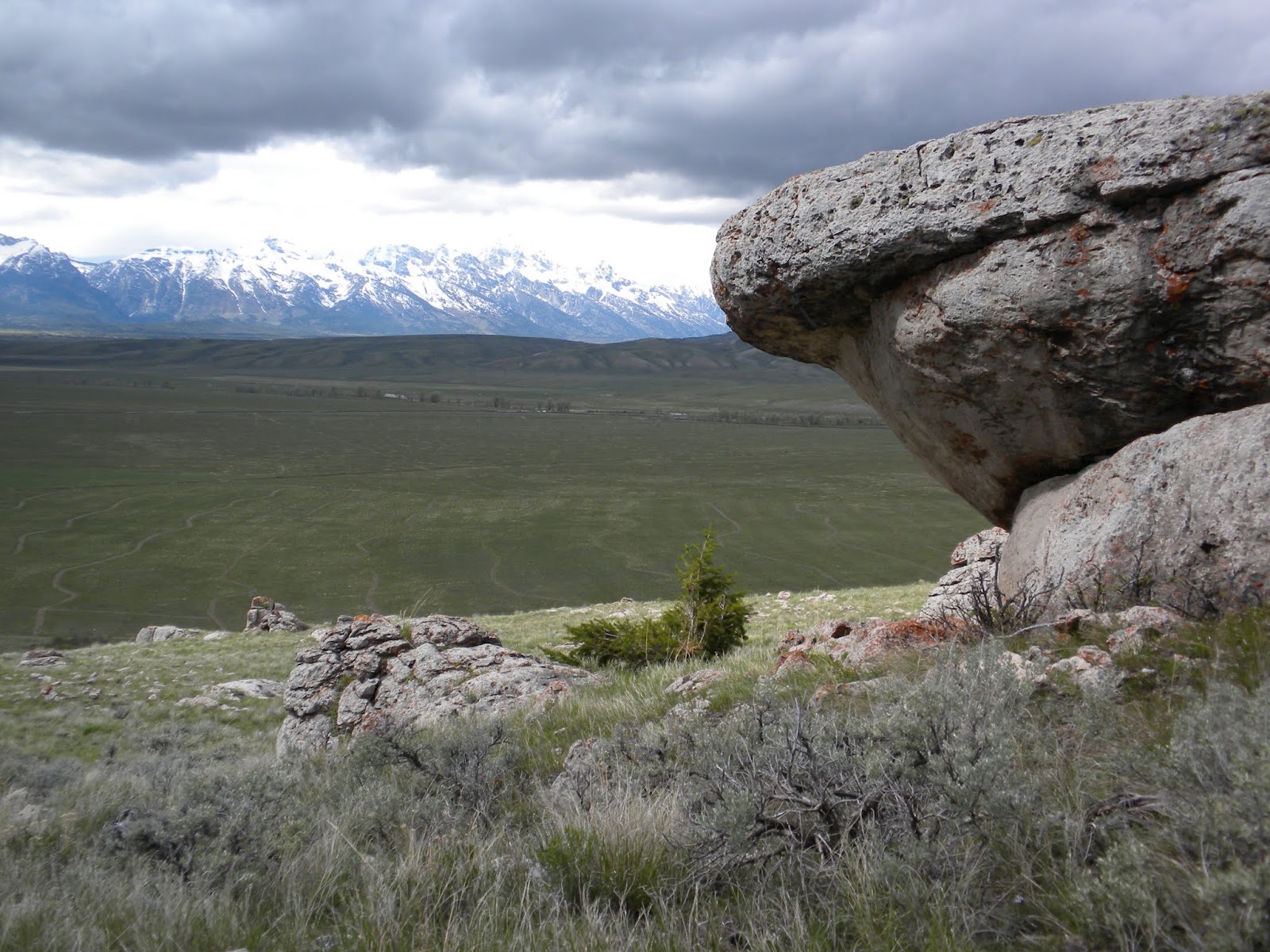
Greyskull Crag and Boulders, Jackson Hole

Greyskull, Upper Crag South
Jackson Hole is a climber's paradise but it has always lacked decent climbing or bouldering close to town.  Hopefully, this recent discovery changes that.

It's been a dreary spring, so the other day my buddy Bart and I planned to take advantage of a sucker hole over the Elk Refuge to squeeze in a few moderate trad routes at Curtis Canyon.  While heading down the Refuge Road we noticed the shoddy looking cliffs about a mile North of the Curtis Canyon pullout and our curiosity got the best of us...

Greyskull Prow with Tetons in the distance.
After an easy 20 minute stroll, we discovered a beautiful zone with quality limestone and no signs of previous climber activity.

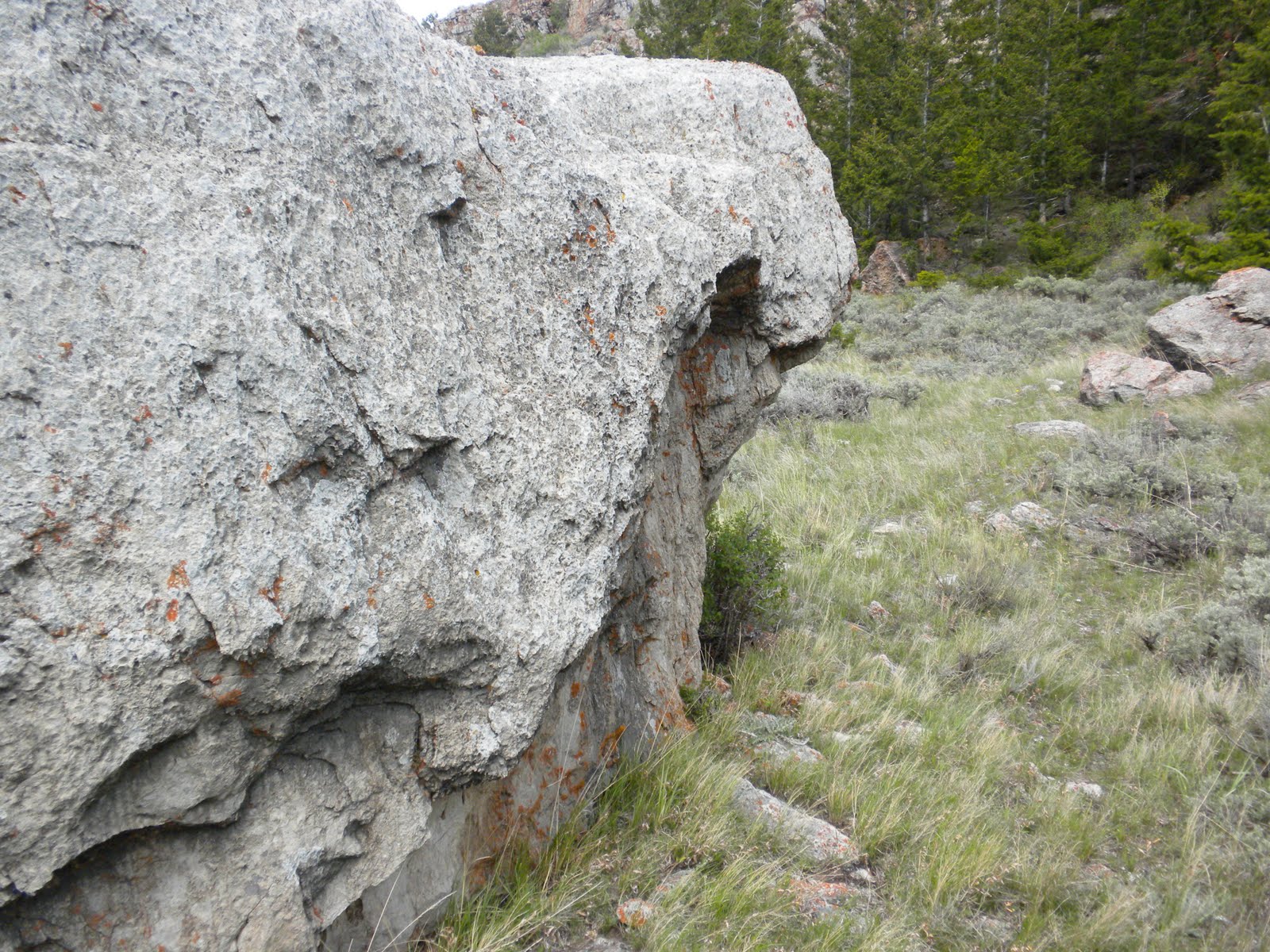
Much of the rock in the vicinity is garbage but over a dozen interesting boulders and 3-4 small crags comprised of quality rock serve up everything from very easy to ridiculously hard climbing.


I returned a few days later to scramble around, take some pics and assess the feasibility of "developing" the area. Much of the climbing seems too hard for my tastes and it would be a great deal of work to develop alone.  As such, I'm sharing the discovery in hopes that folks get jazzed to explore and climb the area themselves.  I'm referring the place as "GreySkull" because there are numerous weathered Elk skeletons in the area... and because the rock somehow reminds me of Castle Greyskull from the old He-Man cartoons.


There are many "first!?" ascents to be had: boulder, sport, and trad.  Bring typical cleaning tools and a strong work ethic to guarantee you'll get to attempt whatever catches your eye.  Since it has yet to be developed, watch out for loose rock and sketchy landings.
Main Lower Crag: Mostly Crap Rock...
Much of the rock in the vicinity is crap but don’t be deterred.  The high quality rock is hiding in and around the woods above the biggest crag.  It’s about a half hour bike ride (10 minute drive) and 20 minute walk from Downtown Jackson.  Bring multiple pads for maximum fun and safety.  Again, watch out for loose rock… it’d be a long mile back to the bike/car with a broken ankle.

Though it's less than a mile from the road, the area is close to the perimeter of the National Elk Refuge and sees little human traffic.  During the two trips I've made there, I've seen Elk, Deer, a Coyote, Red Tail Hawks, Mountain Goats, Marmots, and countless signs of wildlife.  There are nests and burrows throughout the crags and if the place is abused, all that wildlife will disappear pretty quickly.  Though dogs are allowed, maybe it's a better idea to leave them at home.  Obviously a low-key presence and respecting nesting sites is a good idea as well.

Getting There: 
  • DO NOT WALK THROUGH THE  NATIONAL ELK REFUGE.
  • Park your bike/car (it's only ~6 miles from Downtown Jackson) at the Curtis Canyon pullout just before the road turns and begins ascending into the Gros Ventre.
  • Follow the main trail that soon crosses the creekbed like you're headed to the Curtis Canyon Crag.
  • Veer left about 100 yards before you reach the Curtis Canyon Crag and ascend the short ridge to a faint game trail along the hillside.  You'll be walking pretty much straight North.
  • Follow the faint game trail until you find a spot good for descending back to the flats OUTSIDE the National Elk Refuge Boundary.  Continue ~0.5 mile North towards the biggest crag.  You'll find one short wall offering a few high quality cracks on that crag, but most of the rock is crap.
  • Scramble around the biggest lower crag and explore ~20 boulders and small crags of high quality scattered in the woods just above it.
  • DO NOT WALK THROUGH THE  NATIONAL ELK REFUGE.
Here's a little eye candy to whet your appetite for exploration...
Short but Sweet Overhanging Offwidth On the Biggest Lower Crag
Another View of that Offwidth and Other Good Cracks Nearby
Really Good Rock Above the Lower Crag

Ditto.
Blocky Fun Overhanging Boulder... Needs A Little Cleaning Up Top.

Sparse, Clean, Overhanging Faces Like This Are All Over The Place.
GreySkull Prow Boulder... Note Hypocritically Placed Dog For Scale.
For more pictures, check out the article here...

4.06.2010

Learn to Trad Climb the Fun, Affordable Way


Summits like Wyoming's Grand Teton are guarded by only a few easy trad pitches... and a whole lot of scrambling.


There are few things more satisfying than summiting a remote peak or topping out an obscure multi-pitch climb.  The exposure, route finding, full body exertion, and connection with true wilderness offers a sense of adventure few people get to experience.


Sadly, most climbers are among the inexperienced majority.  For one reason or another, most of us never get turned on to trad climbing.  Some declare it lame. Some think it’s too expensive. Many are intrigued but intimidated.
Actually, trad climbing is the polar opposite of lame, and getting into it need not cost more than a few hundred dollars.  It also doesn’t have to be overly intimidating.
You don’t need to be exceptionally strong to climb trad.  You don’t have to send difficult sport routes or boulder problems, though you certainly need to be comfortable leading whatever grade you wish to tackle trad.  Most of the funnest trad climbing I’ve done was in the 5.5-5.8 range: boring sport climbing but exhilarating in the midst of a big day on a big pile of rock… and also a lot friendlier on the fingers than most difficult climbing.
The intimidation many folks feel comes largely from uncertainty about placing and trusting gear.  Many climbers capable of leading difficult sport routes are uncomfortable on much easier trad routes.  Intuitively, many of us put more trust in old bolts placed by god-knows-who than we are capable of putting in our own gear placements.  This is only natural.  A little fear is healthy when dabbling in trad.
The trick to breaking into the boundless world of trad climbing is learning to place gear, to build anchors, and to trust that they will safely serve you.  Also, of course, learning the appropriate skills to apply when things go wrong is crucial before venturing into the realm of more committing trad routes.  There are three suggested methods for learning these day-to-day and emergency skills.
1.  Take lessons from a professional mountain guide.  Pay someone for their patient instruction and pearls of wisdom.  This method certainly works, but learning through paid instruction alone would be very expensive.  Also, many of the basic skills needed to climb trad are easily learned on your own.  A little background knowledge goes a long way in getting the most for your money when paying for climbing instruction.
2.  Apprentice under a “Trad Master”.  Climb with someone reputed to really know what they’re doing and study their actions.  Watch their technique from your belay stance, then clean their gear while following the pitch.  Analyze the anchors they build, how they rack their gear, how they conduct themselves on the rock, what knots they use, how they treat their gear, what they do when things go wrong, etc.  This method is obviously much cheaper than professional instruction but it’s by no means foolproof.  Unfortunately, many “Trad Masters” actually aren’t that masterful.  Many have just been lucky despite downright dangerous habits and a knowledge base lacking in important areas.  Also, cleaning a pitch while following it is a very different experience than placing your own gear while leading.  You can spend months following someone around and still lack the knowledge and confidence to safely lead trad on your own.
3.  Buy your own gear and teach yourself the basics of trad climbing on your own.  If you do this right, it’s safer than following most “Masters”, cheaper than hiring a guide, more gratifying, and you’ll probably learn faster too.  How can this be?  Simple!  At first, you leave the rope at home and don’t climb higher than a few feet off the ground.
Get your hands on a few nuts, cams, slings, and ‘biners and head for the hills.  You don’t even need to bring a harness but comfortable old climbing shoes are usually handy.  Don’t forget to include  a nut tool in your practice rack.  A helmet is recommended in areas where rockfall is likely.  Remember that the lightest, fanciest, most-reputable gear in the climbing world won’t do you any good if you don’t know how to use it properly.  More important than acquiring a lot of gear is having a strong grasp of how to best use what you’ve got.
Search out any old crag and traverse along the base while placing, weighting, studying and cleaning gear.   Hike through boulder fields looking for cracks and flaws where you can build an anchor.  Go for a mountain bike ride with a light rack in your CamelBack.  If you see an interesting piece of rock, stop and practice your placements and anchors.  Even if the rock turns out to be garbage, it’ll still prove a great learning experience.  You’re not only learning how to place gear but how to read rock quality from a distance.
Place gear in Granite, Sandstone, Limestone, and in any other kind of rock you encounter.  Learn the dimensions of each piece and study the rock looking for suitable flaws.  Keep practicing until you rarely misjudge the proper piece for a placement.  Practice placing cams but really focus on mastering passive protection placements.  Active protection is much easier to place but mastering nut, hex, and tri cam placements will pay off.  You will get gear stuck.  Learning to calmly get it unstuck is an essential skill to develop.  You only have to lose one piece to learn how important focusing and taking your time is when placing gear.
Mountaineering: the freedom of the hills 7th edition
The Bible of Trad Climbing and Mountaineering
Studying books on climbing in addition to practicing on real rock is crucial to learning.  I recommend all of these books, especially Mountaineering: The Freedom of the Hills andRock Climbing Anchors.  The book Self-Rescue is about what to do when things go wrong and is a crucial read if you’re planning to climb far from the beaten path.

Rock Climbing Anchors: Crucial Read


Once you’re comfortable placing gear and building trad anchors, consider leading sport routes with both your sport draws and trad rack.  Though it will be redundant, clip bolts and place gear.  This gives you great practice placing gear while leading with the added security of frequent bolts.  Also, it provides a great opportunity to learn how to avoid rope drag between pieces of protection.  The straighter and more freely your rope passes through protection, the better.  Like your first time getting a piece hopelessly stuck, you’ll  learn a major lesson when first dealing with extreme levels of rope drag.
Once you’re comfortable placing gear and building anchors while incorporating the rope, consider your first real trad lead.  Make it an easy one and make sure you’ve got the gear you need to properly protect it.  If you’re lacking confidence, this would be a good time to climb with a guide or “Trad Master”.  With a strong foundation of knowledge from studying and practicing on your own, you’ll take a lot more out of the experience.
Once you’ve made a few trad leads you’ll be hooked for life and you’ll never look at climbing (or a mountain) in the same way ever again.  Have fun and be safe.  No matter how safe you are, however, eventually things will go wrong, and you’ll be glad you read up on…

1.17.2010

Budget Backcountry Nutrition 101


Monkeying around in the mountains burns an incredible amount of calories.
As backcountry bums, we get to eat as much as we want of whatever we want with minimal consequences.
While the rest of Western Civilization gets miserably fatter, our own gluttony makes us blissfully stronger... at least in theory.

Nothing beats starting off a day in the hills with a tall glass of oj, a pitcher of water, six cups of coffee, biscuits and gravy, eggs Benedict, and a syrupy stack of huckleberry pancakes... especially if it's all served up by a friendly 30-something-mountain-town-career-waitress.

And Dog knows we all love capping off a day in the hills with buffalo wings, nachos, a fat burger, and six to ten pints of  brew.  Worst case scenario?  Food Coma and a DWI.  Best case scenario?  Food Coma and Erotic Massage.

Sadly, even with local hookups, stoking your internal furnace at the tavern gets pricey.  DWI's aren't cheap either  Generally also expensive is mentally lubricating a local beauty into an erotic masseuse willing to overlook the skid marks in and funk emanating from your long johns.  Hence, poaching a hot tub becomes mandatory, and potential legal fees multiply.

Proven.

Also, those tubs are fucking filthy.  Many a monkey butt has been there before yours.

Thus, the clever backcountry bum dines at home and out in the hills.  Hygiene can slide, commitments can wait, whole years may blend together into a blissed-out state-of-stoke... but ya gotta stay fed.

Most active folks don't eat enough throughout the day.  You burn serious energy hiking, biking, climbing, shredding gnar, and acting rad in the parking lot.  Think 300-400 calories per hour.  Spend a mere five hours getting after it and you need to eat at least double what the typical schmo eats.

Dehydration and hunger pangs are often mistaken for exhaustion.
Eat more.  Drink more.  Play more.
Less cramps.  Less burn.  Less fatigue.

Also, if you get hurt, lost, or otherwise benighted you'll more happily pray for the dawn on a full stomach.
Over the course of along cold night, a couple crusty old candy bars could save your life.

Most nutritionists over-complicate matters with a lot of scientific mumbo jumbo.  They also recommend foods the typical mountain bum can't afford.  You know the stuff: organic free-range everything.  Well, that's all fine and dandy.  If you can afford it, do it.

This article is for bums.  You know who you are.  Onward!

***

 BREAKFAST!


Breakfast is the most important meal of the mountain bum's day.  Consider the following  guidelines...

*Drink plenty of coffee or tea so you'll poop heartily before leaving the land of flush toilets.
*If at all possible, have a banana and an orange and an apple.  Fruit is healthy.
*Drink a grip of water.  Pee clear all day.
*Eat heartily... if things go wrong it could be your last real meal for a while... if things go really wrong it could be your last meal ever.  Enjoy it.
*If you wake up lacking appetite or stoke, consider herbal stimulation.
*Eggs, peanut butter and breakfast meats are your best friends.  Pile on the carbs, but a good source of protein is key.
*A little grease never hurt anyone.  Just wash it down with Emergen-C Heart Health.
Lastly, no one expects poachers at a continental breakfast.  Score an official looking bathrobe.  Feign cluelessness.  Reap benefits.  Worst case scenario, you get kicked out.  Best case scenario, you stroll through the lobby with a full tummy, coffee-to-go, a pack brimming with gratis goodies, and drooling Tougar digits.

A Tougar is a Cougar on vacation.

***

DINNER!


Dinner after a day in the hills is crucial too.  You need the calories, but a careless approach can break the bank...

*If stuck dining at home, consider eating breakfast twice.  Eggs are cheap and delicious.
*Throw a weekly pot luck.  People mess up their kitchens and bring food to your place.  You'll have to wash a few plates but the booze and leftovers will pile up.
*Best-case scenario is a dinner party elsewhere.  Always be friendly, and you'll be booked solid..
*Odds are you work nights at a restaurant anyway.  Demand dank shifties.  Remember, with the right attitude, even the worst service industry gig can be a bucket of fun.
*Fuck it, go out to eat.  Just be thrifty about it.
*Yep, life is short.  Go out to eat.  Bullshit with friends.  Chase tail.  Enjoy it, but choose parties wisely...


The most important thing to remember regarding dinner is that grubbing hard and then passing out doesn't do you much good.  Generally, this sort of behavior makes you a fattie.  Be sure to go out dancing or get in a little exercise of some sort before passing out.  Use your imagination... just keep your pants on in public.

***

BACKCOUNTRY DELIGHTS! (aka LUNCH!)

Enough nonsense.

The real pseudoscience of backcountry nutrition comes into play when deciding what foods to pack.

Obviously sporty outdoorsy food is great... but expensive.  So-called junk food does the trick equally well.  Candy.  Cookies.  Bulk berries and nuts.  Cheapo granola-bar-type-stuff.  You're not going to live forever, so there's no reason to eat like it.

Stopping at the gas station or bagel shop en route to the mountains is equally pricey.  A better bet is buying in bulk and stockpiling goodies.  Buy discounted Halloween candy through December.  Christmas treats until February 14th.  Valentine's closeouts should keep you satisfied through Easter... and my bet is Cinco de Mayo will blow up this year and keep you fed through summer skiing.

These three simple guidelines should keep you satisfied out there.

1) Calories: more is better.
2) Fluids: more is better.
3) Performance Enhancers: more is usually better.  Avoid all "energy drinks", getting too drunk, stoney stupors, and regularly tripping your face off.

But seriously, after devoting five years of my life to backcountry skiing/climbing/monkeying, I have a few actual, non-nonsensical suggestions:


If you've never eaten an Almond Joy in the mountains, you have not truly lived.  Good fresh, better smashed...  cottonmouth-friendly... perfect ratios of carbs/proteins/fats... chewable at temps where any other candy bar shatters teeth... the entire taste-experience reminiscent of a tropical beach... they come in pairs so you can share with your buddy... the little white cardboard support is perfect for firestarting, exchanging digits with backcountry beauties, and emergency wiping.  Buy em' by the case.  You'll never find anything better.


Swedish Fish were specially formulated for Nordic Ski Commandos during WWII.  Entire battalions of Swedes subsisted on nothing but Swedish Fish for months on end.  Since Sweden didn't choose a side in WWII, those Nordic Ski Commandos just fucked around out in the mountains... just like you and I.  Pay homage to their legacy and eat the Fish.  Additionally, unlike mere gummies, the hearty Swedish Fish can live unprotected in your pocket or at the bottom of a pack for months on end.  Wipe off the lint and enjoy.


Mmmmmmmm... Heaven.  10,000,000 Ice Fishermen can't be wrong.


Calories?  Check.
Fluids?  Check.
Performance Enhancers?  Check.
Delicious?  Indisputable.
A Meal in a Can.  In Ireland young mothers call this "Formula".
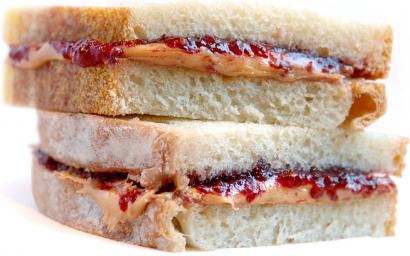


If you can afford nothing else, make an entire loaf of bread into PBandJs.  You can do a multi-day tour on this alone.  The more smashed up they get, the easier they slide down.


Go to the bulk bins at the store.  Fill a bag with everything that looks good.  Remember the ID# for the cheapest bulk food and self-checkout.  Enjoy.


Nothing beats a hot drink on a cold mountaintop.  Get the nicest thermal bottle you can find and remember to fill it daily.  Tea with Scobs of Honey.  Emergen-C Hot.  Irish Coffee.  Mexican coffee.  THC-Infused Hot Buttered Rums.  Mushroom tea.  The sky's the limit.


Better cold than hot.  Cheap, filling, and depressingly-shocking to those uber-health nuts you just passed on the boot pack.  Properly-torqued, the lid doubles as a spoon.


If you've got the hookup, sushi is the ultimate backcountry snack.  A recycled single shot bottle makes the perfect soy/wasabi receptacle.  Speaking of which...


Don't go an overnight with liquid courage.  The woods are scary at night.  Then again, the flask is a cheaper option for spirits and libations.


Gatorade is weak Kool-Aid with a little salt and potassium in it.  Buy Kool-aid powder, sprinkle a little salt into it, crush up a Centrum or two, and presto!  If you want an "Energy Drink" smash some NO-DOZ into the mix.  You've just saved yourself a grip of money.  You've also saved your metabolic pathways from the ravages of artificial stimulants like TAURINE.


Cold pizza is always a welcome addition to any backcountry calorie stash.


The best thing you can possibly eat in the backcountry is a root beer float.  Make one in your Nalgene just before leaving home.  Even the hateriest hater on the hill will crack a satisfied smile if you can convince them to take a swig.

***

Variety is the spice of life.  Mix it up.  Enhance your backcountry experiences with dank eats.

Any suggestions?